Campus
Nandan Nilekani Backs Last-Minute Question Paper Generation to Prevent Exam Leaks
Share this news
Published: 10/14/2026
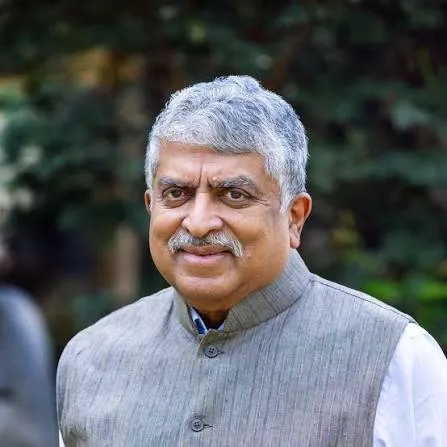
Infosys co-founder Nandan Nilekani, who heads the high-powered task force on examination reforms, has advocated creating a massive question bank and generating examination papers at the last minute to prevent question paper leaks. Speaking at the Bloomberg New Economy Forum 2026 in New Delhi on Tuesday, Nilekani said the problem could be addressed through a systematic approach that identifies its root causes and uses technology to strengthen examination security.
“Why do we need to have something called a question paper? Because the moment you have a question paper, then that creates an economic incentive for it to be sold,” Nilekani said, explaining the rationale behind the proposed approach.
He suggested that examination authorities maintain a large bank of questions and use it to generate the final paper shortly before the examination. This, he said, would reduce the opportunity to obtain and sell a fixed question paper in advance, thereby removing the financial incentive behind leaks.
“The way to do that is to really have a massive bank of questions. And only at the last minute generate the question paper for that day,” he said, adding that artificial intelligence (AI) could also potentially be used to generate examination papers on the day of the test.
Nilekani heads the six-member task force constituted in July in the aftermath of the NEET-UG paper leak controversy, which triggered widespread student protests and raised questions about the security and conduct of competitive examinations. The panel was given three months to submit its recommendations.
While Nilekani did not disclose the contents of the task force's report, he said Prime Minister Narendra Modi was keen to implement its recommendations. He added that the committee was examining systemic issues affecting examinations and would propose measures to address them.
Another key recommendation under consideration is the expansion of computer-based testing (CBT). Nilekani said the existing network of approximately 1.5 lakh locations where students take computer-based tests would need to be expanded to accommodate the transition towards technology-driven examinations.
Moving to computer-based testing would require substantial investment in infrastructure, including secure examination facilities, information technology systems, and reliable internet connectivity.. At present, examination centres are leased to vendors.
The proposed measures also align with recommendations made by a parliamentary committee in its report on reforms and strengthening of the National Testing Agency (NTA). The committee called for the creation of a large, diverse and continuously updated question bank from which papers could be prepared without question-setters knowing the final selection in advance.
It also recommended setting question papers close to the examination date, using digital tools to select questions from the bank, followed by expert vetting.
Meanwhile, the NTA has asked the All India Council for Technical Education (AICTE) to identify suitable spaces in government technical institutions for establishing standard testing centres.
A senior government official said the task force was reviewing suggestions received from various stakeholders and that its final report was expected to be submitted by the end of October.